


Last year, several reports were published in which real estate professionals stated that Dutch physical retail had bottomed out and was once again a growth sector.
Cushman and Wakefield, for example, stated in Vastgoedmarkt: “After years of uncertainty, retail property is once again popular with all types of investors. After fifteen years of turmoil, the retail market is now entering calmer waters.”
Meerdervoort wrote in Vastgoedjournaal: “Physical shops have reinvented themselves. They have become part of retailers’ omnichannel strategy. They offer experience, visibility and service, and they remain crucial for everyday purchases. In fact, in many medium-sized cities, we are seeing shopping centres performing better than expected.”
The CBS also reported positive figures: last November, physical shops saw a 3.8% increase in turnover compared to the same month a year earlier.
Our footfall counts also showed a further upturn, with visitor numbers in shopping areas rising by 3% compared to 2024.
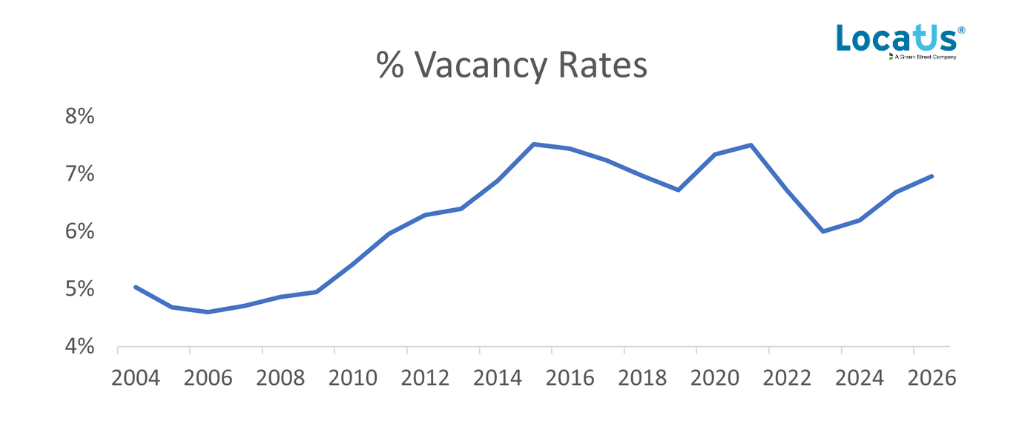
However, despite this, vacancy rates rose again last year, from 6.7% at the beginning of the year to 7.0% now, although the increase in 2025 is less than in 2024, when vacancy rates rose from 6.2% to 6.7%.
A decline in the number of retail properties
In addition to an increase in vacancy rates, last year saw a decline in the number of retail properties for the tenth year in a row. Last year, there were just over 207,000 properties, now there are 1,600 fewer, with just over 205,000 remaining, of which nearly 14,000 were vacant last year and now more than 14,000.
Despite the positive signs, we are still seeing a decline in the number of properties, and of the remaining properties, more are vacant. As in previous years, the decline in the number of properties was entirely due to a decrease in the number of retail properties, while the number of properties in the hospitality, leisure and services sectors remained virtually unchanged last year.
The number of retail properties fell below 80,000, compared to 107,000 twenty years ago, a decrease of 26%. Despite the decline in the number of properties, the number of retail square metres remained stable for a long time, but in recent years the number of occupied retail square metres has also been falling.
Differences between shopping areas
Vacancy rates rose in almost every type of shopping area, with the sharpest increase seen in Retail Parks. These are mainly furniture boulevards. Since 2020, this type of shopping area has experienced an upturn. Money that could not be spent on holidays ended up here, with the result that the vacancy rate in this type of centre fell to 4.5%. In recent years, however, we have also seen problems here, such as the bankruptcy of CarpetRight, and we are seeing vacancy rates rise in these centres. In the 15 largest city centres in the Netherlands, we saw vacancy rates fall slightly again last year.
The trend we have been seeing for some time, whereby the largest centres are performing better than the smaller ones, was evident again last year. Consumers go to the largest centres in the Netherlands for their serious shopping. In smaller centres, the focus is increasingly on everyday amenities.
Request a demo
Are you interested in learning more about European retail data and the ins and outs of our platform? Request a demo now and contact one of our residing experts.

